Edwards Mechanical Heat Detectors
Class I - DangerousWhat Should You Do?
- Check if you have this product: (About 85,000)
- Do not eat it: Even if it looks and smells fine, do not consume this product.
- Throw it away or return it: You can return the product to the store for a full refund.
- Seek medical attention if needed: If you've consumed this product and feel unwell, contact your doctor immediately.
- Report problems: Report any issues to the FDA's Safety Reporting Portal.
⚠️ Emergency: If you experience severe symptoms after consuming this product, call 911 or Poison Control at 1-800-222-1222.
Recall Details
- Company:
- Unknown Manufacturer
- Reason for Recall:
- The recalled heat detectors can fail to activate in reaction to rising temperatures, posing a risk of failure to alert consumers to a fire.
- Classification:
- Class I - Dangerous
Dangerous or defective products that predictably could cause serious health problems or death.
- Status:
- ongoing
- Hazard:
- The recalled heat detectors can fail to activate in reaction to rising temperatures, posing a risk of failure to alert consumers to a fire.
- Remedy:
- Consumers who use the product in life-safety applications permitted by code (for example, in elevator shafts, or in lieu of smoke detectors, manual pull stations, or sprinklers in particular settings), or in residential attics or residential garages, should immediately contact a fire or security alarm professional for free replacement and installation of the heat detector.
Product Images
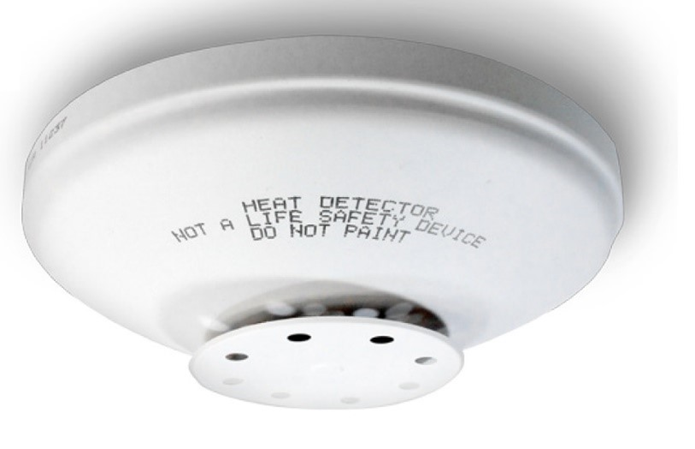
Product Information
Full Description:
This recall involves mechanical heat detectors used indoors to detect elevated temperatures as part of professionally installed fire detection systems for residential homes and businesses. In residential settings, this product is installed in kitchens, attics and garages for property protection. The recalled heat detectors do not detect smoke or make an audible sound, but rather act as sensors that trigger fire alarms or security panels when elevated heat is detected. The heat detectors can be mounted to walls or ceilings and are labeled with "135F" and "NOT A LIFE SAFETY DEVICE." The recalled units are the following: Model # Description Seller 281B-PL Heat Detector, 135F, Rate of Rise and Fixed Temperature Edwards 283B-PL Heat Detector, 135F, Fixed Temperature Edwards 104-13 Heat Detector, 135F, Rate of Rise and Fixed temperature Interlogix 104-15 Heat Detector, 135F, Fixed Temperature Interlogix 1EYC2 Heat Detector, 135F, Rate of Rise and Fixed Temperature Edwards, Grainger P/N 1EYC4 Heat Detector, 135F, Fixed Temperature Edwards, Grainger P/N 281B-20pkg-OEM-UTCO1 Heat Detector, 135F, Rate of Rise and Fixed Temperature Honeywell Security 281B-20pkg-OEM-UTC20 Heat Detector, 135F, Rate of Rise and Fixed Temperature Interlogix 281B-OEM-UTC01 Heat Detector, 135F, Rate of Rise and Fixed Temperature Honeywell Security 283B-20pkg-OEM-UTC01 Heat Detector, 135F, Fixed Temperature Honeywell Security 73340U Heat Detector, 135F, Fixed Temperature and Rate of Rise Mirtone 73342U Heat Detector, 135F, Fixed Temperature Mirtone AI281B Heat Detector, 135F, Fixed Temperature and Rate of Rise Edwards AI283B Heat Detector, 135F, Fixed Temperature Edwards 281A Heat Detector, 135F, Fixed Temperature and Rate of Rise Edwards
Product Codes/Lot Numbers:
(About 85,000)
Official Source
Always verify recall information with the official CPSC source:
View on CPSC.govCPSC Recall Number: 20140
Related Recalls
AMP MP2 Smart Fitness Machine
Unknown Manufacturer
The arm on the MP2 model of the fitness machine does not lock properly, which can allow the arm to swing unexpectedly, posing a risk of laceration or serious injury.
ANNQUAN Power Strips, Models EX-D112-05 and EX-D106-25
Unknown Manufacturer
The power strips do not contain supplementary overcurrent protection, which creates a risk of fire if the power strips are overloaded. The resulting fire can cause serious injury or death from smoke inhalation and burns.
Blue Wave brand 48-inch and taller above-ground pools
Unknown Manufacturer
The compression strap that surrounds the outside of the pool legs may create a foothold, allowing a child access to the pool, posing a drowning risk.